1. The Creation (Genesis 1-2)
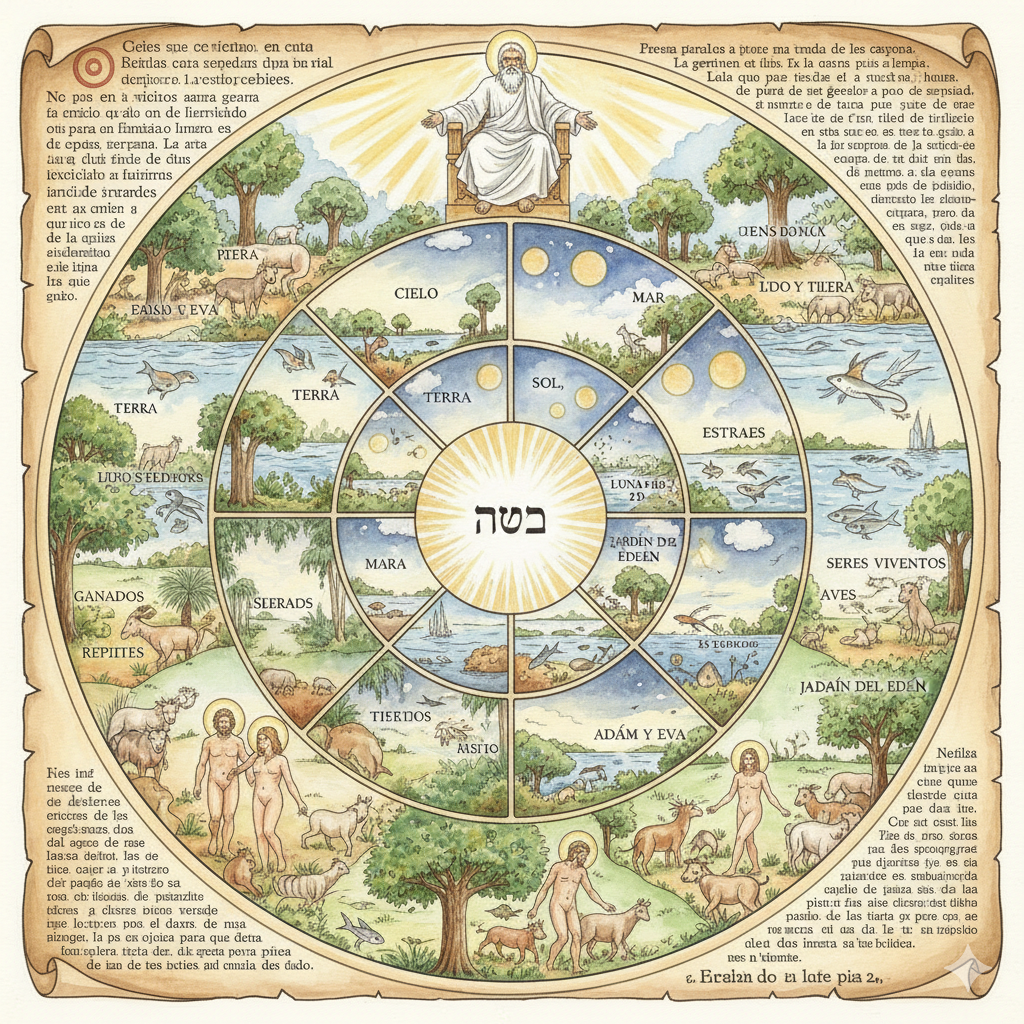
In the beginning of time, before the flow of hours or the vastness of space existed, God, by a free act of His will and infinite love, gave origin to everything that exists. The biblical narrative presents us with a transcendent God, meaning He is above all creation. Unlike the myths of neighboring peoples, He does not fight against chaotic forces but orders the universe through the efficacy of His word. "Let there be," God said, and light dissipated the primordial darkness. With this same sovereign authority, the Creator separated the waters from the heavens and the earth, establishing the limits of the sea and making all kinds of vegetation and fruit trees spring from the earth. Each stage of this work was not the result of chance, but of a wise and loving design; therefore, after each day, the text emphasizes that "God saw that it was good," confirming that matter and life possess an intrinsic goodness due to their divine origin.
The firmament was filled with stars to govern the day and the night, and the waters and the air were filled with living beings. However, creation was still waiting for its protagonist. In a second moment of special solemnity, God decided to create the human being. The Bible highlights that while other things were created by a general mandate, for man, God seems to "stop" and deliberate: "Let us make man in our image, after our likeness." This "let us make" is a first indication of the Holy Trinity. God is a social God; within Himself, there is a relationship of Love. This Truth will be clearly stated in the New Testament, but for now, it remains hidden. Thus, from this "let us make," Adam is created from the dust of the earth and the divine breath, and from his side, to show equality of nature, Eve emerged. Both were placed in the Garden of Eden, not as slaves, but as masters and custodians of creation, endowed with intelligence and will to enter into a dialogue of friendship with their Maker.
Finally, on the seventh day, God rested. This rest does not indicate fatigue, but the fulfillment of the completed work. By blessing this day, God sanctified time and offered the human being the opportunity to participate in His eternal joy. The entire cosmos was thus established as an immense temple where man, as the priest of creation, is called to give glory to God, recognizing in the beauty of what was created the reflection of the invisible perfection of the Creator.
Key Points according to the Bible
- Creation "ex nihilo": God is the absolute origin of everything; nothing pre-exists His creative action.
- Ontological Goodness: Evil is not a creation of God; everything that comes from His hands is fundamentally good.
- Dignity of the Person: The human being is the only creature on earth that God has loved for itself, created for communion with Him.
- Unity and Sexuality: The creation of male and female establishes the foundation of marriage as a blessed and indissoluble union.
- The End of Creation: The world was made for the glory of God and so that man might find in it the path to his eternal destiny.
Source Text
You can consult the original source here: Genesis - United States Conference of Catholic Bishops
Reflection Activities
| 1. Text Comprehension: According to the Genesis account, what phrase does God use to order the universe and what observation does the text make after each day of creation? |
| 2. Doctrinal Content: Explain the concept of "Creation ex nihilo" and why the text affirms that matter has an intrinsic goodness. |
| 3. Christian Anthropology: What meaning does the use of the plural "Let us make" in the creation of man have for Catholic doctrine and what does it reveal about the nature of God? |
| 4. Catechetical Application: The text describes the human being as the "priest of creation." How can you, in your daily life, give glory to God through nature? |
| 5. Commitment of Faith: If God "rested" on the seventh day to sanctify time, in what way does Sunday rest help you participate in the eternal joy of your Maker? |